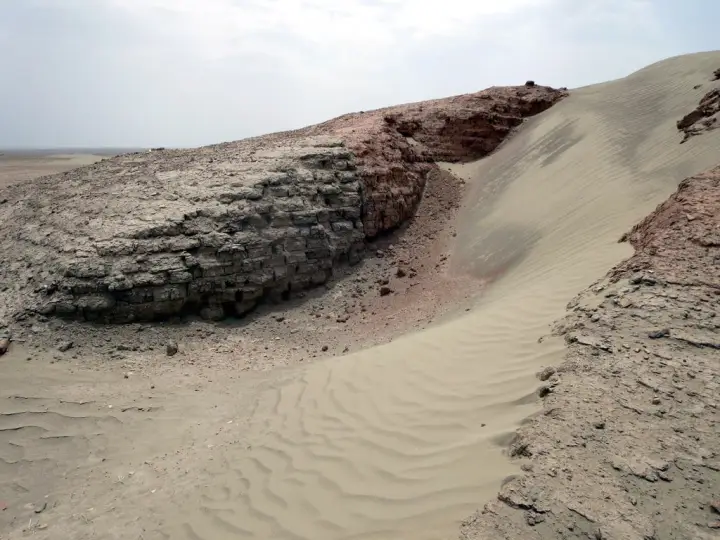

Larsa matters because it was the capital of a strong kingdom in the early second millennium BCE, when southern kingdoms competed for power after the fall of the Third Dynasty of Ur. It was the city of the sun god Utu and his temple, E-babbar. Its last king, Rim-Sin I, ruled for about sixty years, until Hammurabi of Babylon annexed it in 1763 BCE and the south's centre of power shifted to Babylon. The famous mathematical tablet Plimpton 322 is thought to have come from Larsa, although its findspot is uncertain.
City of the sun god Utu and his temple, E-babbar. It became the capital of a strong kingdom in the early second millennium BCE.
Its last king, Rim-Sin, ruled for nearly sixty years, until Hammurabi of Babylon annexed it to his kingdom.
Notable factRim-Sin was one of the longest-reigning kings in Mesopotamian history.
Visitor guide
Approximate straight-line distance; the road is longer.
Best time: Roughly November to March. Summers in the south are extremely hot, often above 45°C, so avoid midday visits in summer.
Practical tips:
- Arrange your visit in advance with the Dhi Qar Antiquities Inspectorate; archaeological sites are protected and guarded.
- Bring plenty of water, a hat and sun protection; most sites have no shade or services.
- Do not walk on exposed walls or pick up any sherd or stone; Iraq's Antiquities and Heritage Law No. 55 of 2002 forbids it.
Getting there
About 50 km north-west of Nasiriyah. The site is open desert; visits are arranged with the Dhi Qar Antiquities Inspectorate.
Photos of the site


Sources
Information last reviewed: November 2026. Dates are approximate.